House in Kamakura
Site: 東京
Architect: 芦沢啓治建築設計事務所
Project architect: 芦沢啓治 /呉昭彦
Structural engineer: ASA 鈴木啓
施工: 大同工業
Landscape: 橋内庭園設計
Photo: 見学友宙
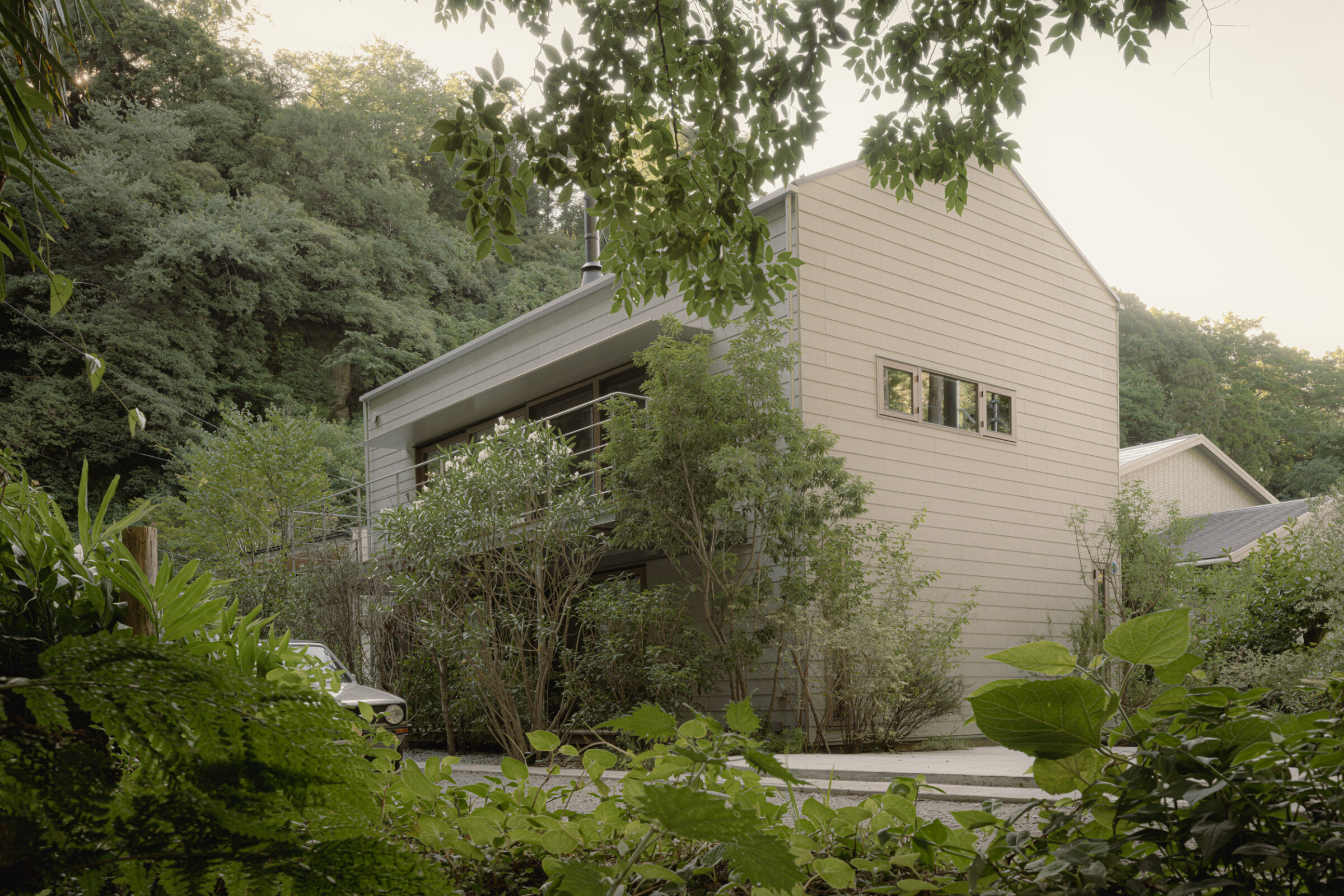
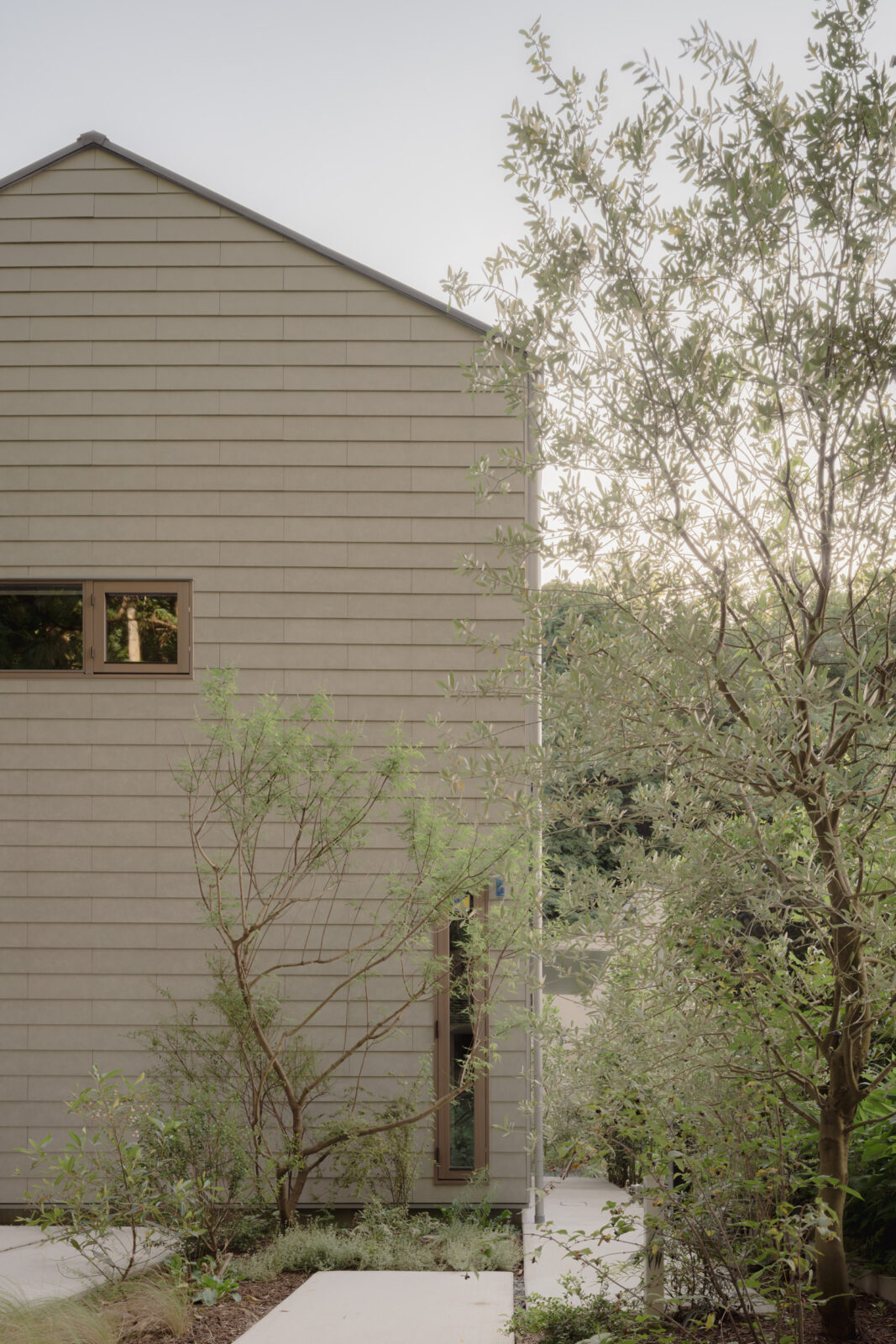
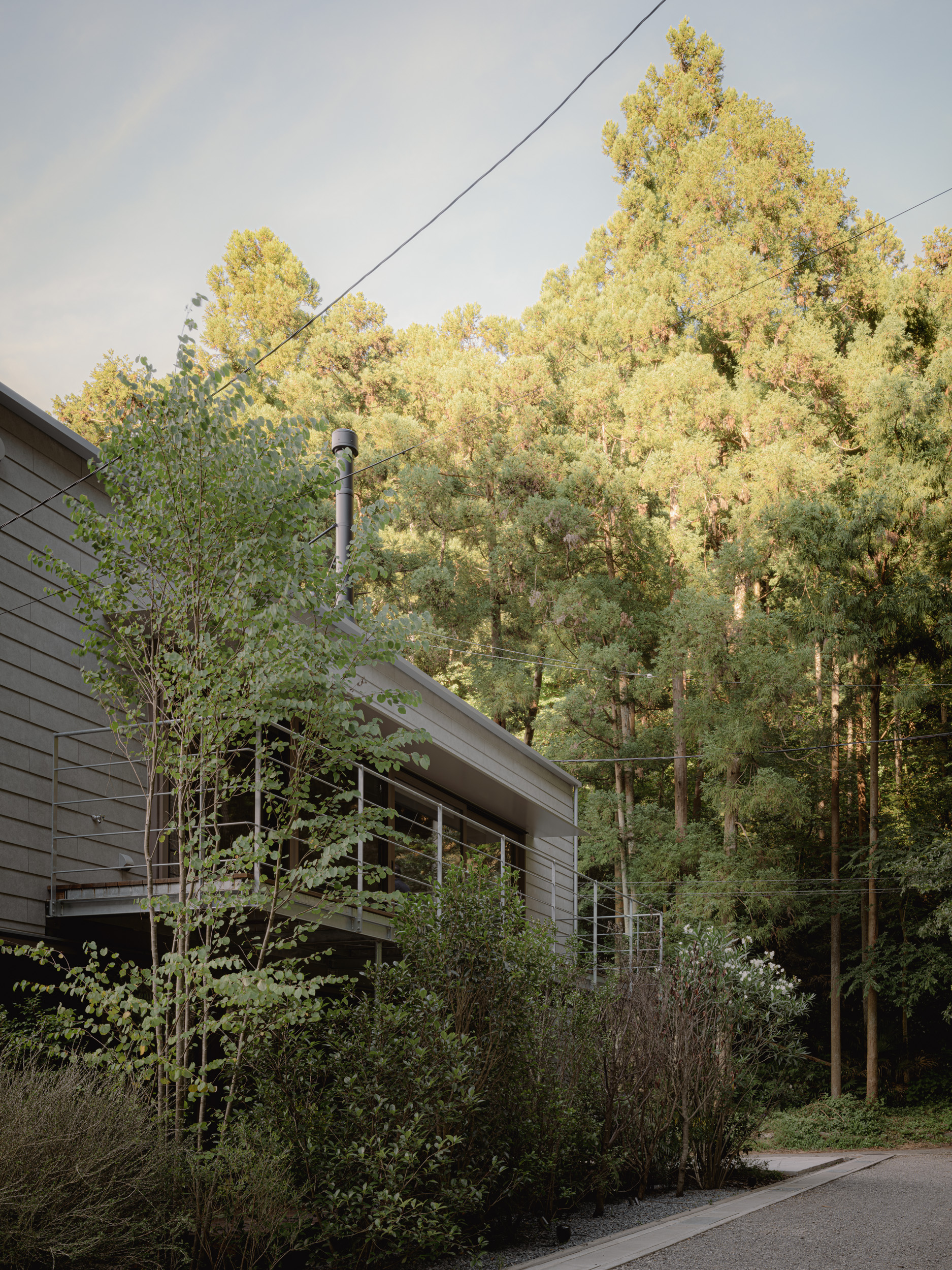
街道から伸びる細い山あいの道を進むと、三角屋根を持つ素朴な佇まいの住宅が姿を現す。週末の滞在と仕事場を兼ねて計画された木造住宅である。
設計の検討は外構計画から始まり、外からの見え方や周辺環境との関係性を重視している。 敷地条件や駐車スペース、周囲の景観を踏まえ、最小限の機能と合理性を定めたうえで、細 部の設えを積み重ねることで全体像を導き出した。
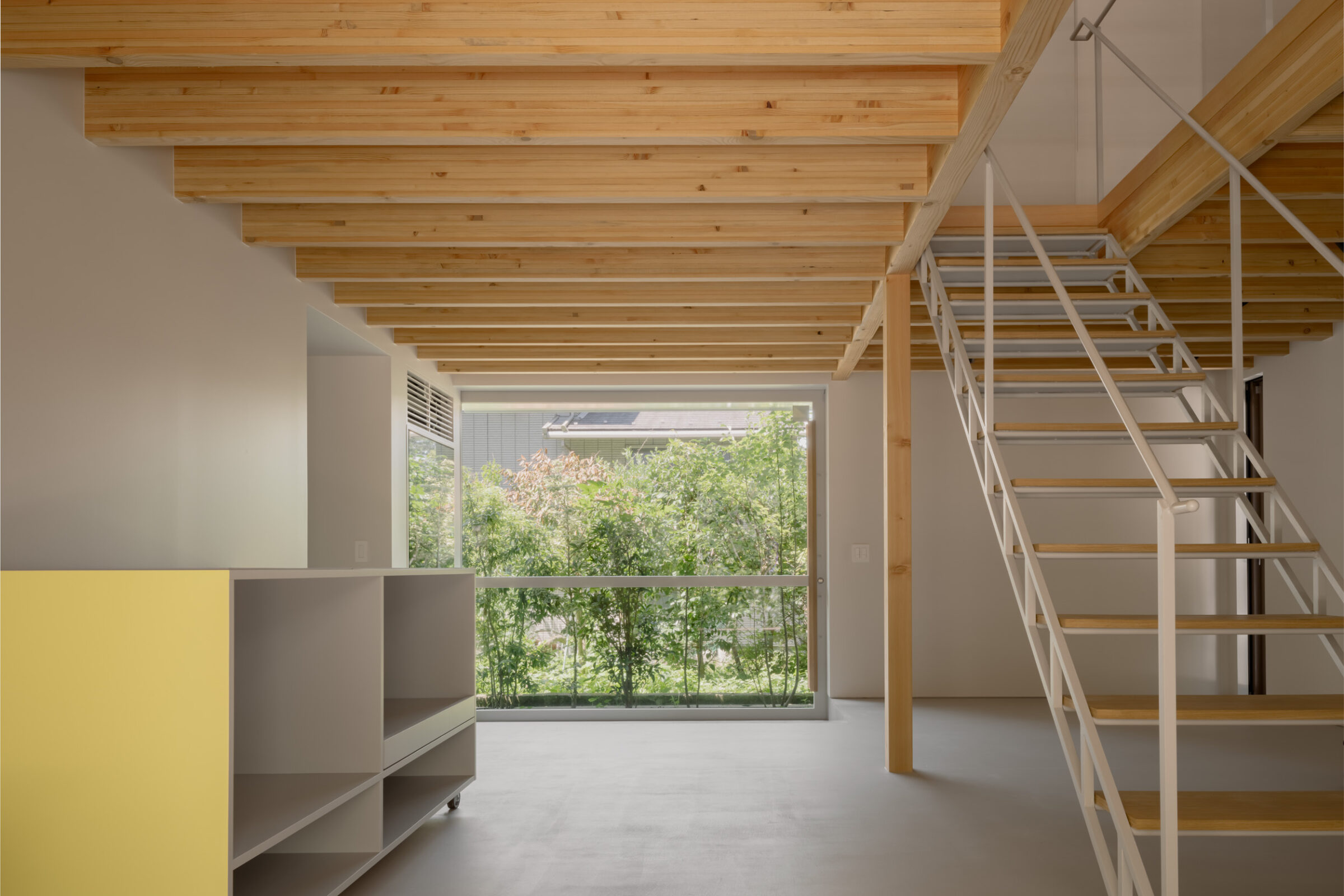
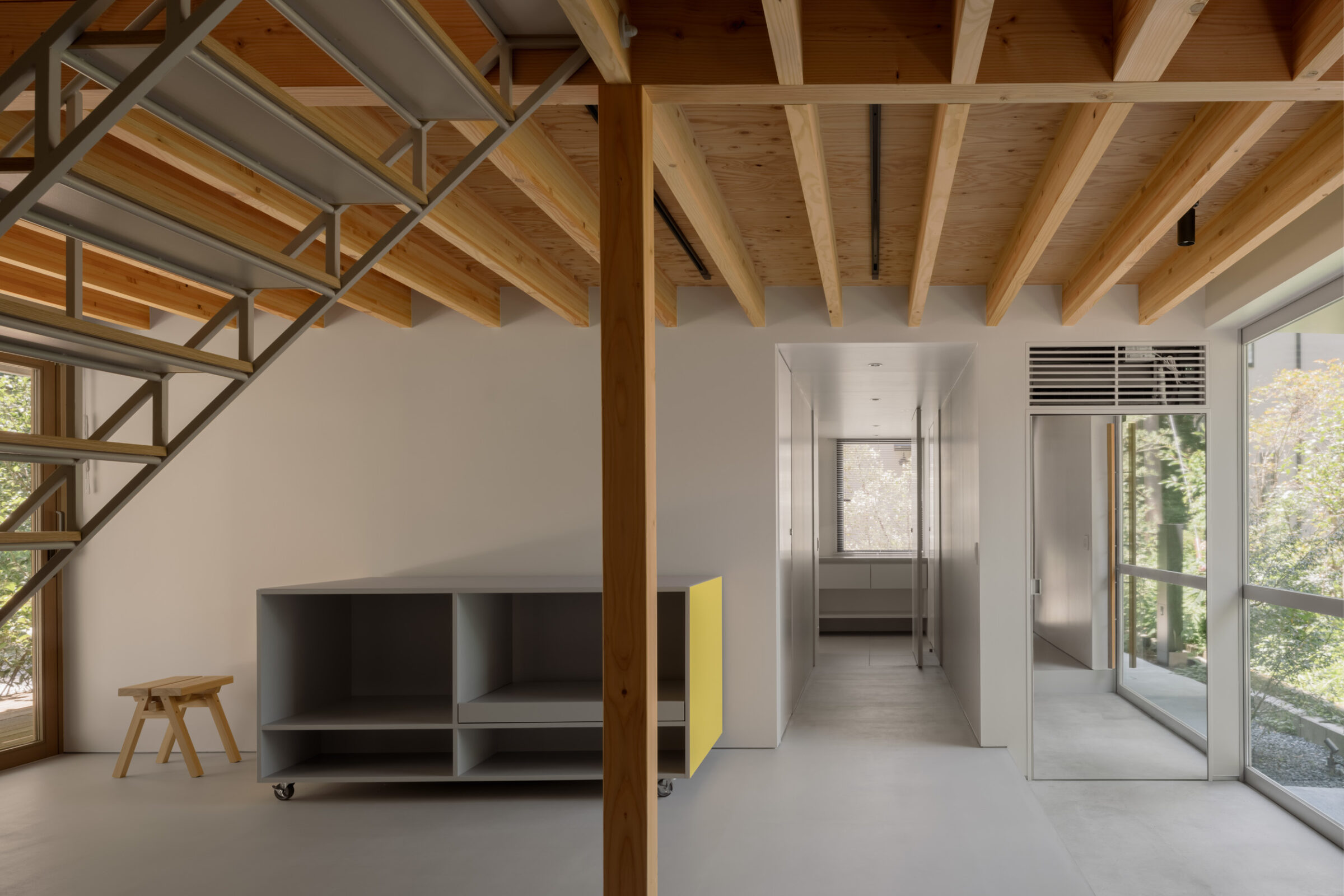
在来工法によるシンプルな構成を基本としながら、現代的な暮らしに対応する柔軟さを持たせている。1階にはワークスペースやアトリエを設け、スタッフとの作業や来客時の利用に応 える。大きなガラスを用いた特注の引き戸を玄関に据えることで、開放的でありながら落ち着いた作業環境を実現している。また、ワークスペースにはマグネット式の壁を設置し、日常 的な創作活動を支える場とした。
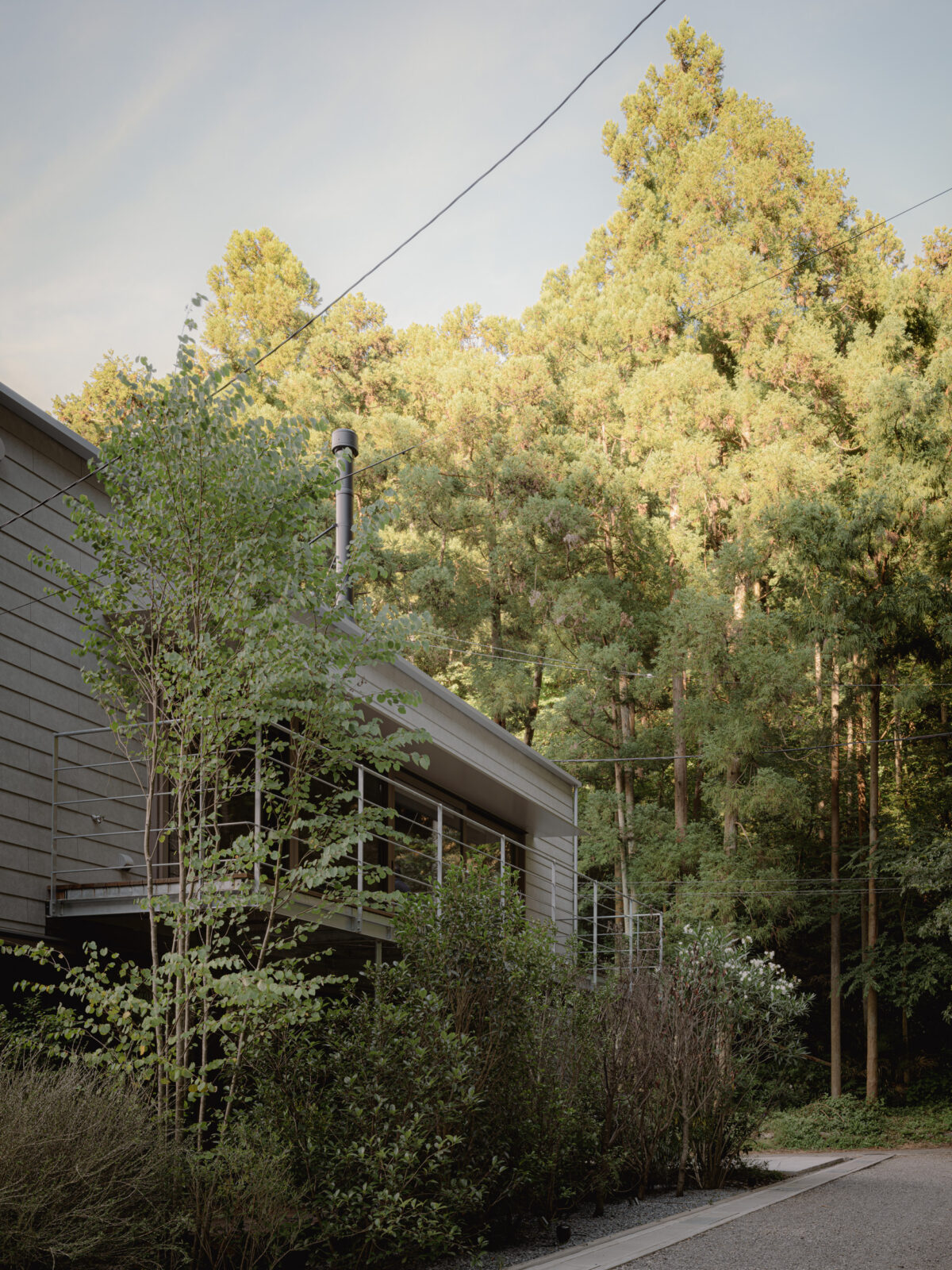
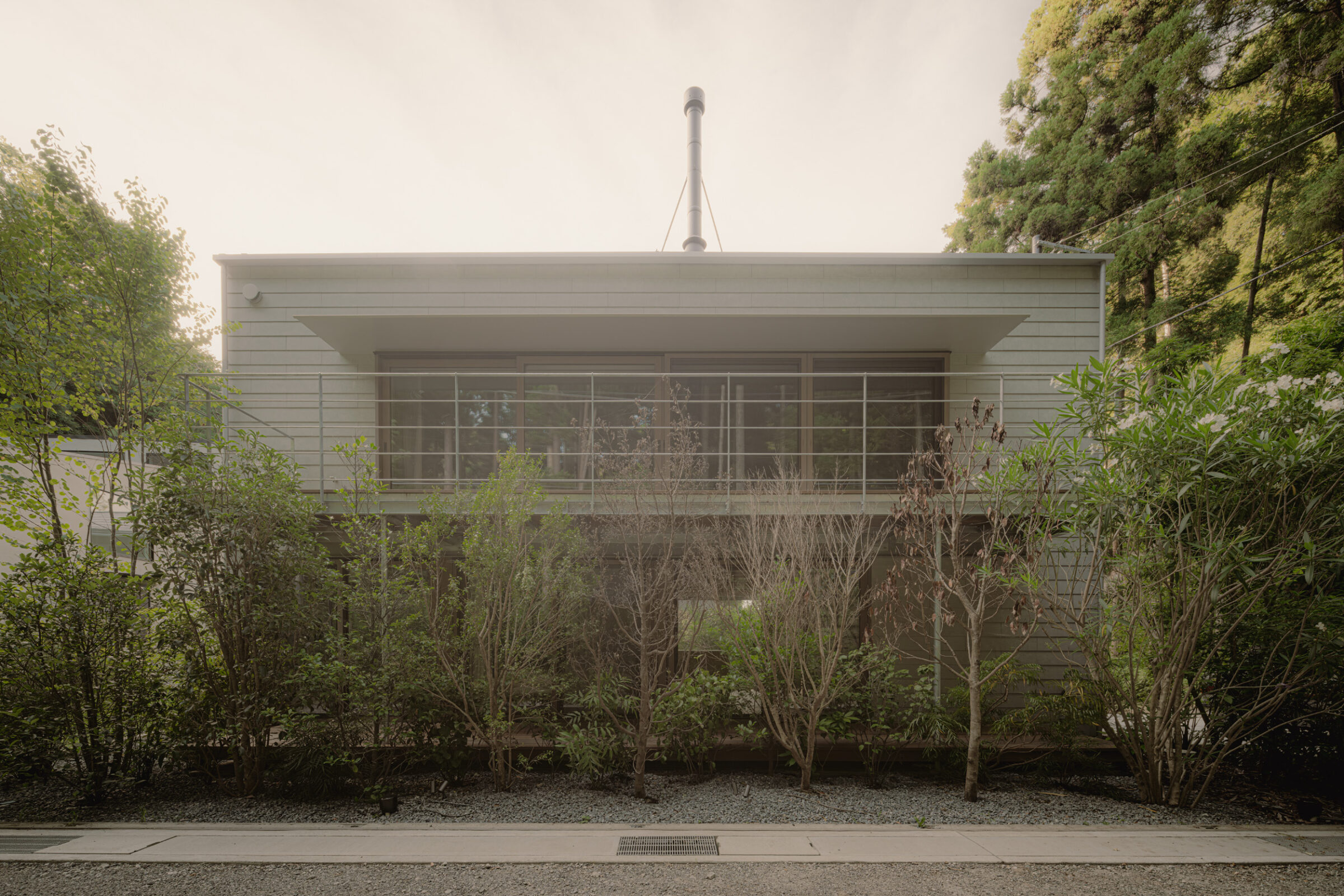
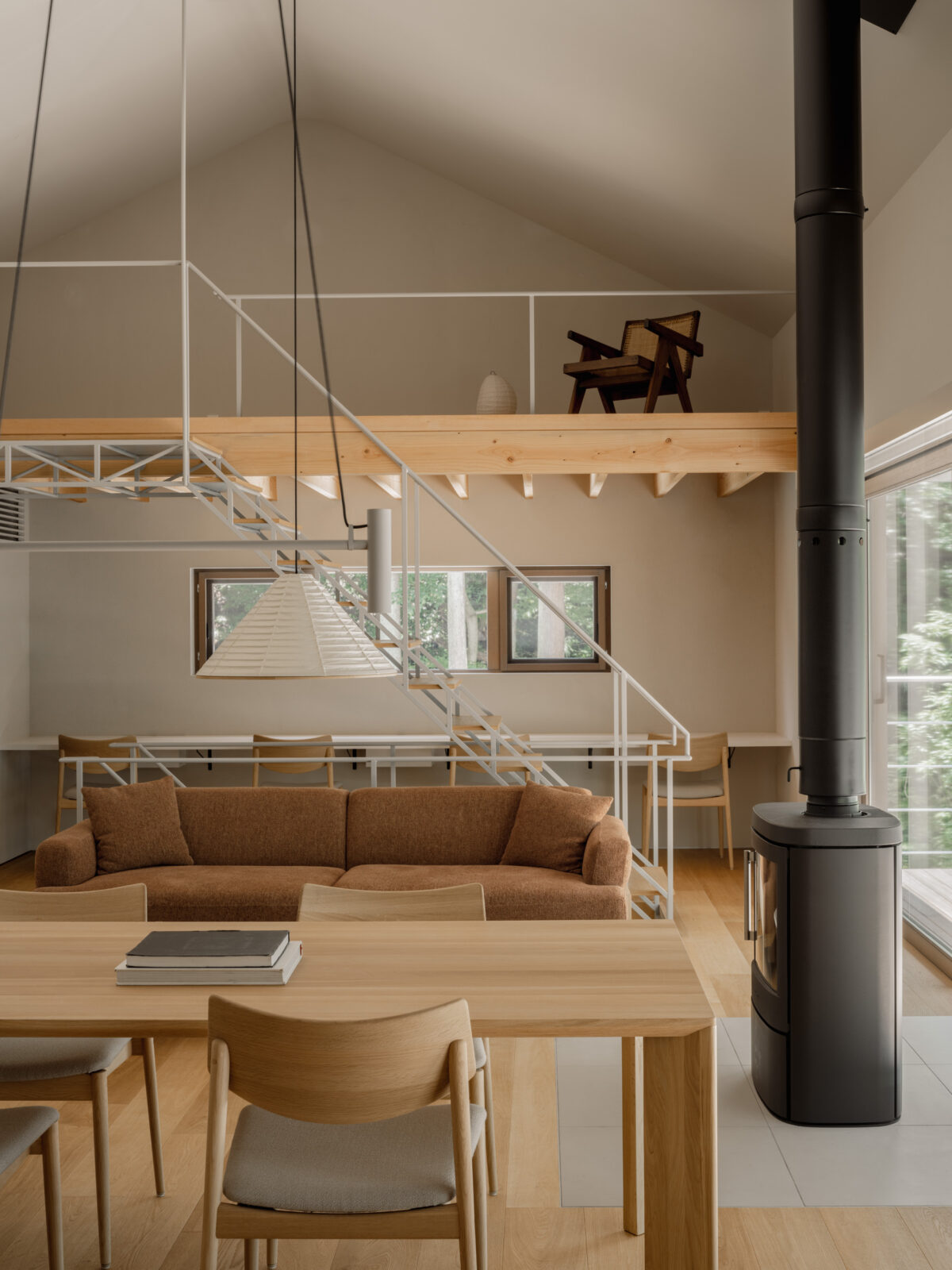
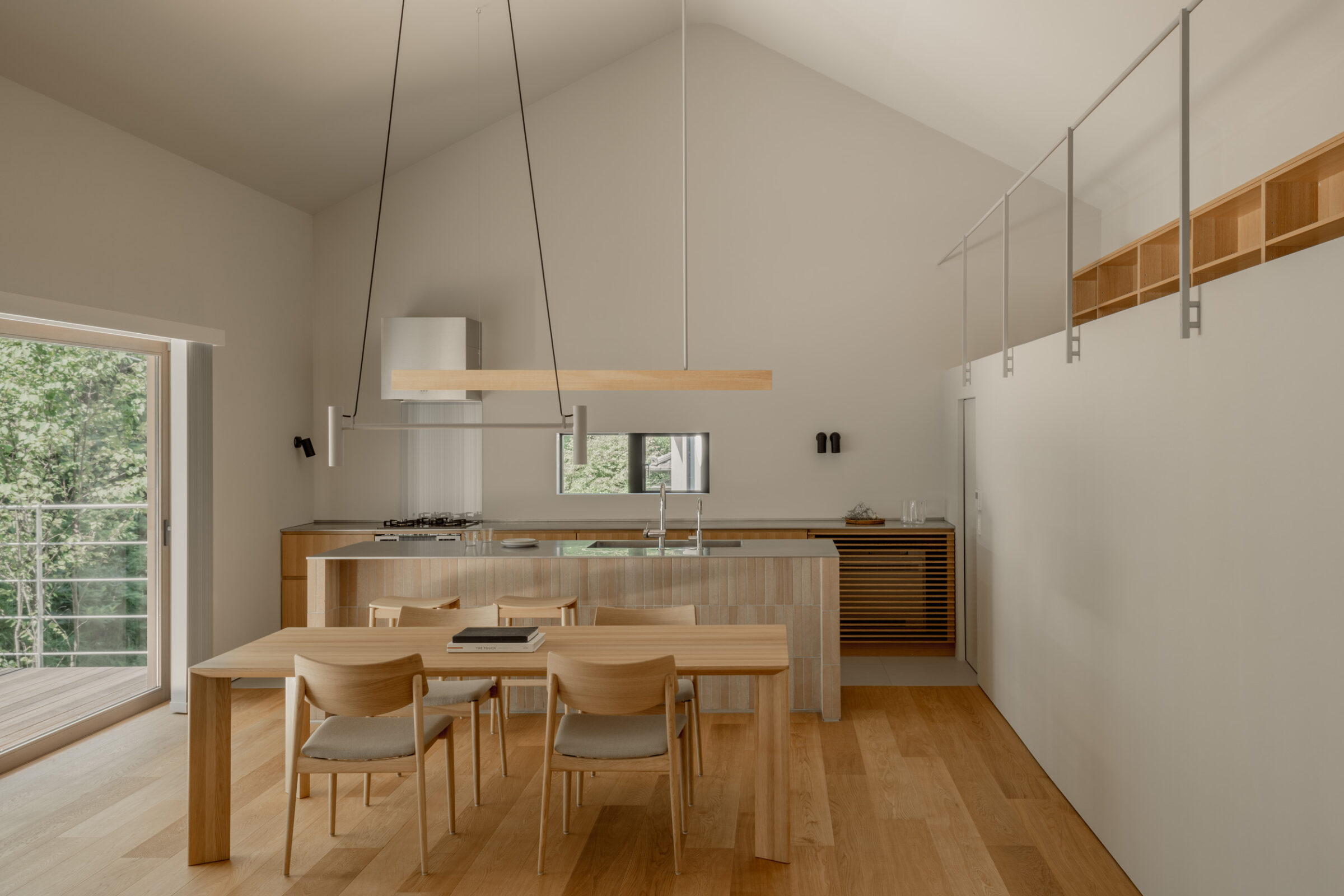
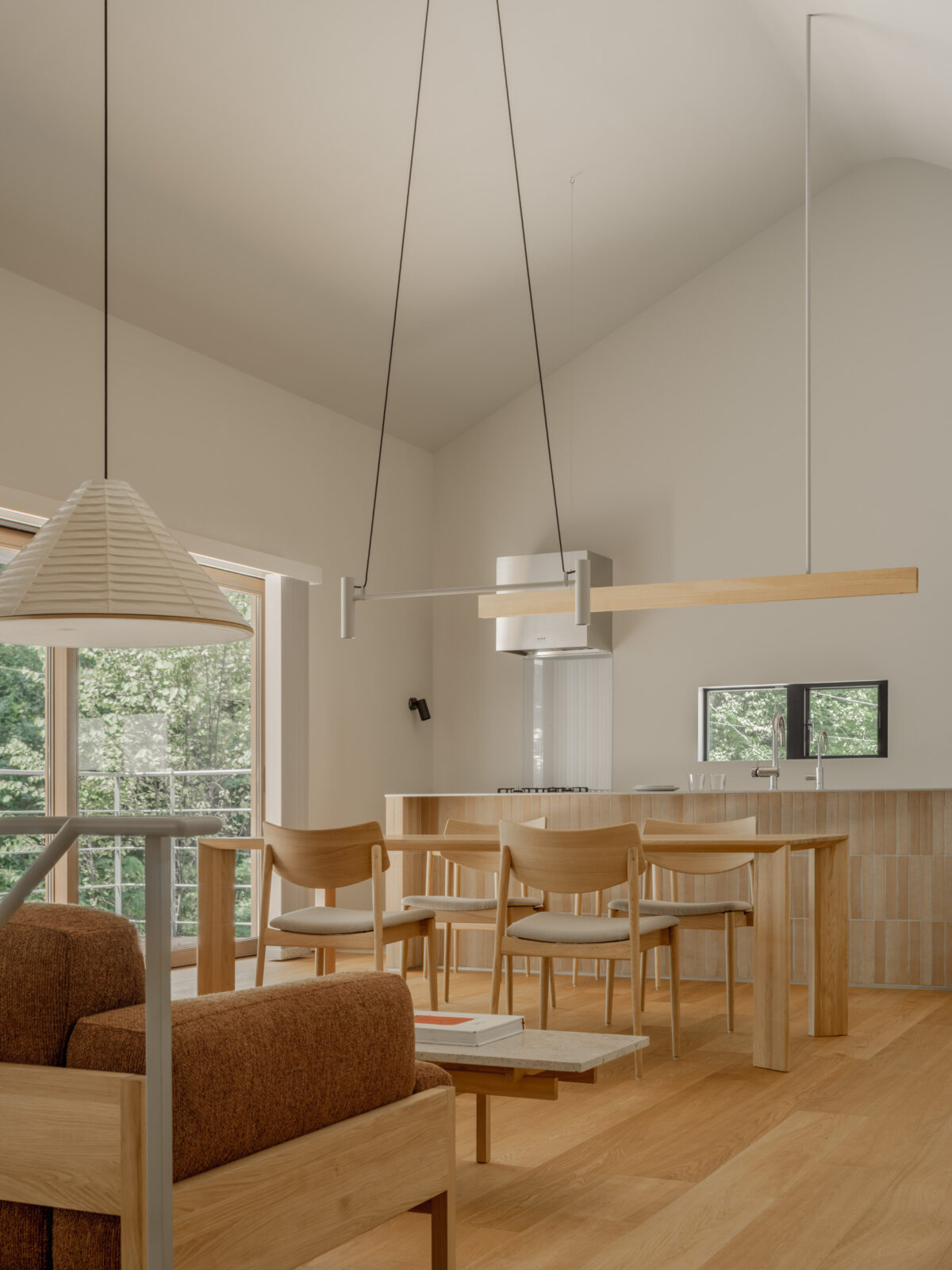
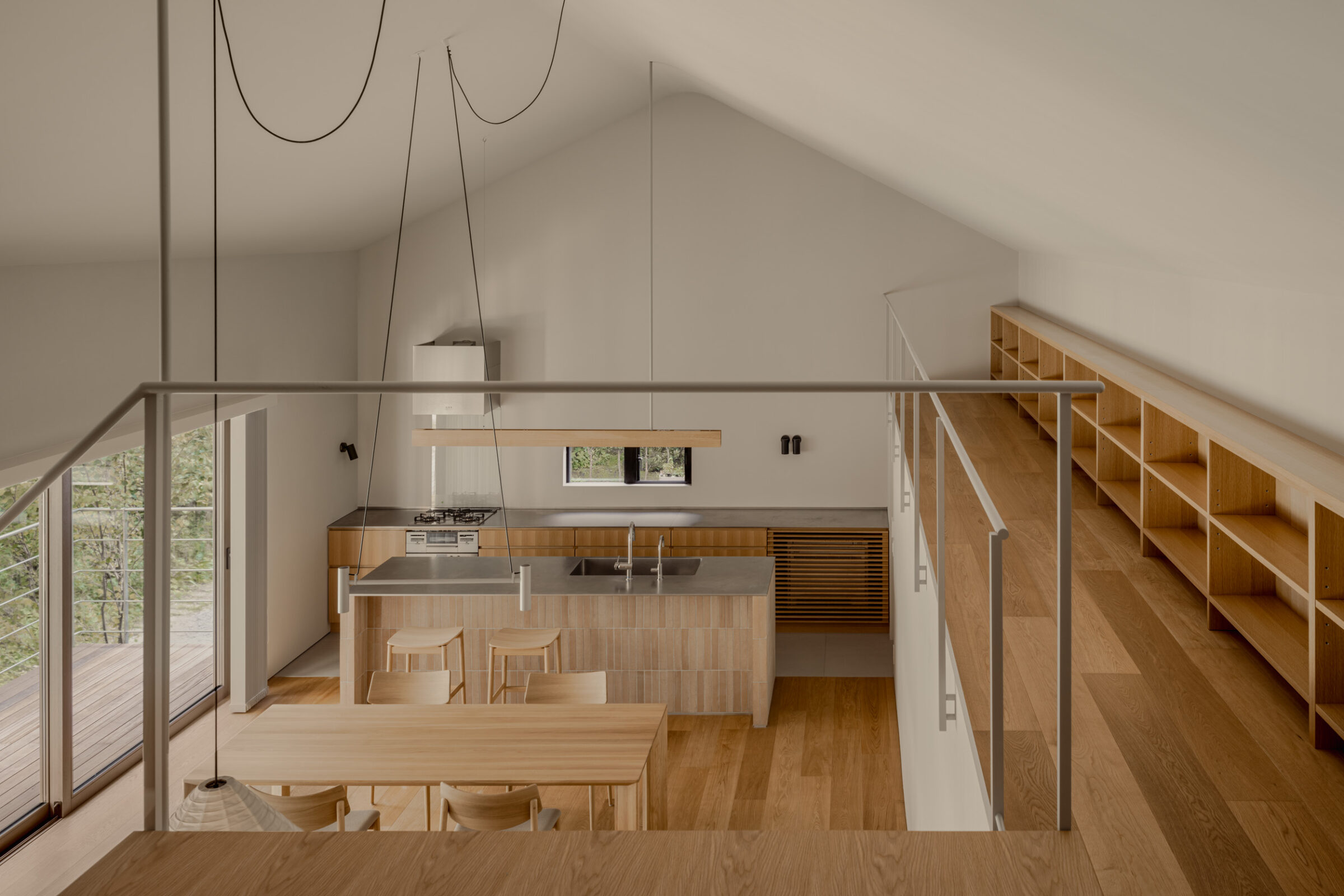
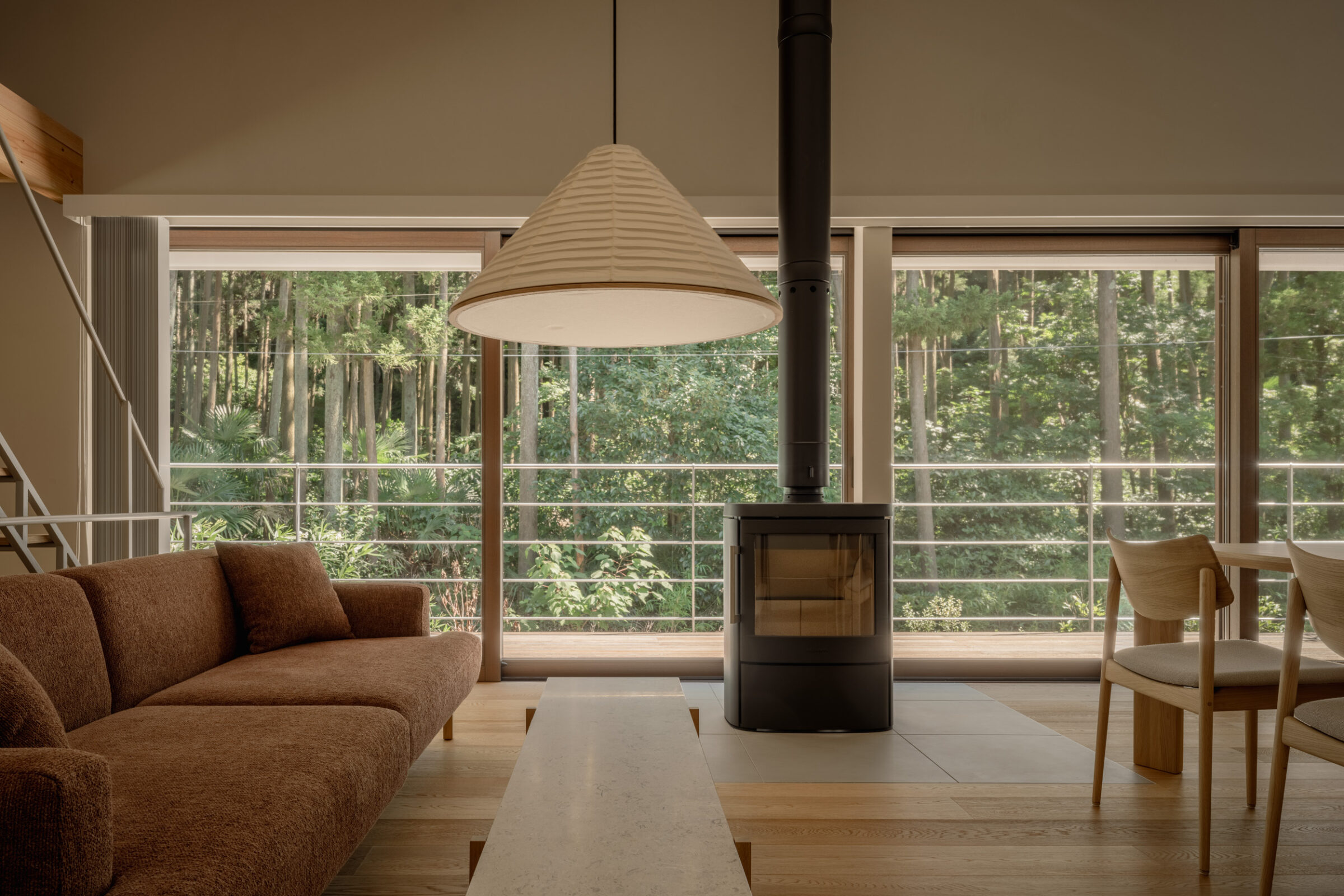
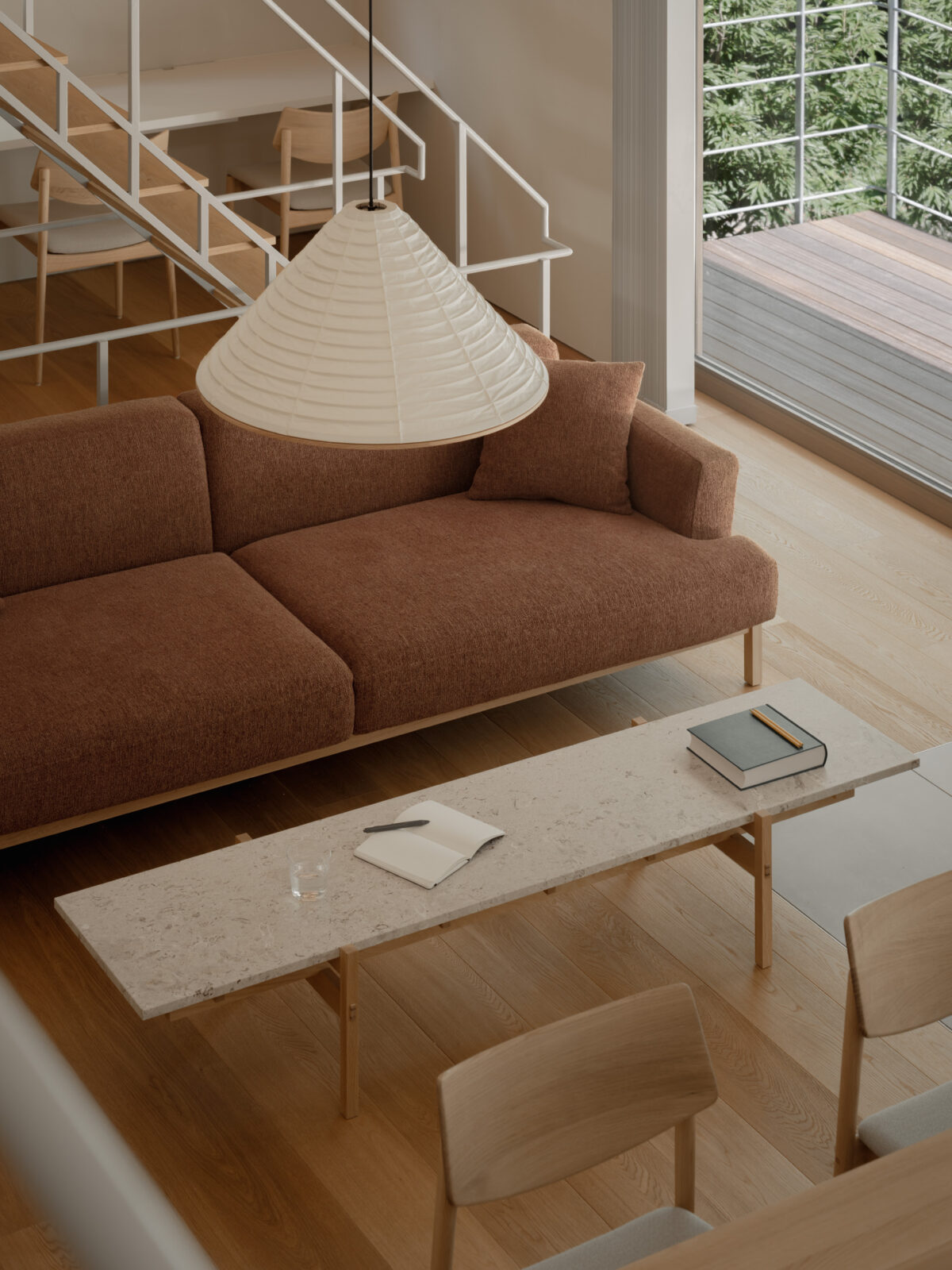
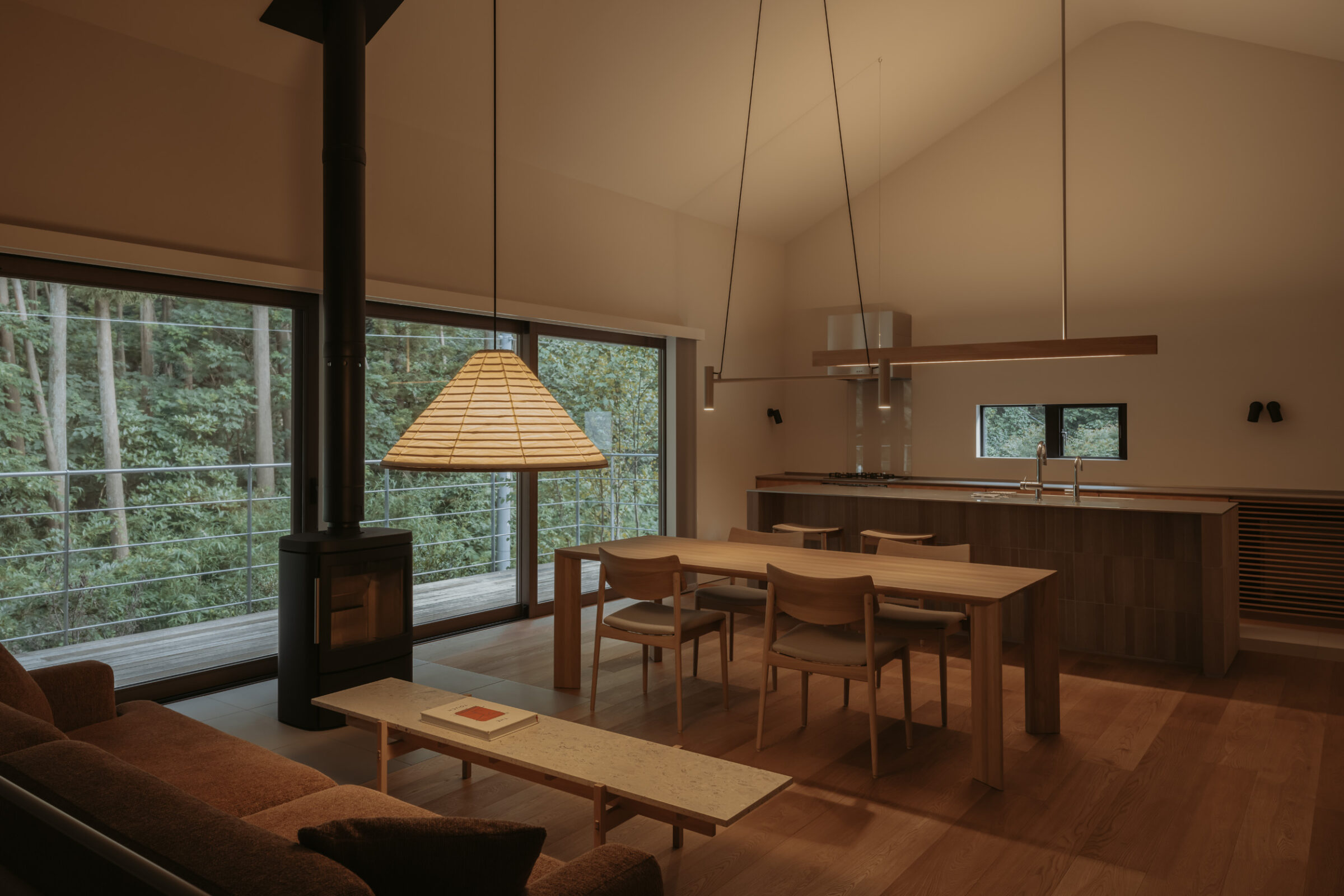
2階はリビングダイニングを中心に構成され、南面に大きな開口を設けつつ、軒やデッキテラスによって直射光を遮っている。過度な明るさを避け、落ち着いた光環境をつくることで、 窓外に広がる緑の風景が一層際立つ。随所に設けられた開口は、眺望を引き込みながらも 過ごしやすい室内環境を確保している。
すぐ側にある森の風景と共に、この家での過ごすさまざまな時間がどんなときも豊かなものであることを願っている。
Site: Kamakura
Architect: Keiji Ashizawa Design
Project architect: Keiji Ashizawa / Chaoyen Wu
Structural engineer: A.S. Associates Akira Suzuki
Construction: DAIDO
Landscape: HASHIUCHI LANDSCAPE DESIGN
Photo: Tomooki Kengaku
Along a narrow mountain road branching off from the old highway, a modest gabled house gradually emerges from the landscape. Built in timber, the residence was designed to serve both as a weekend retreat and a place of work.
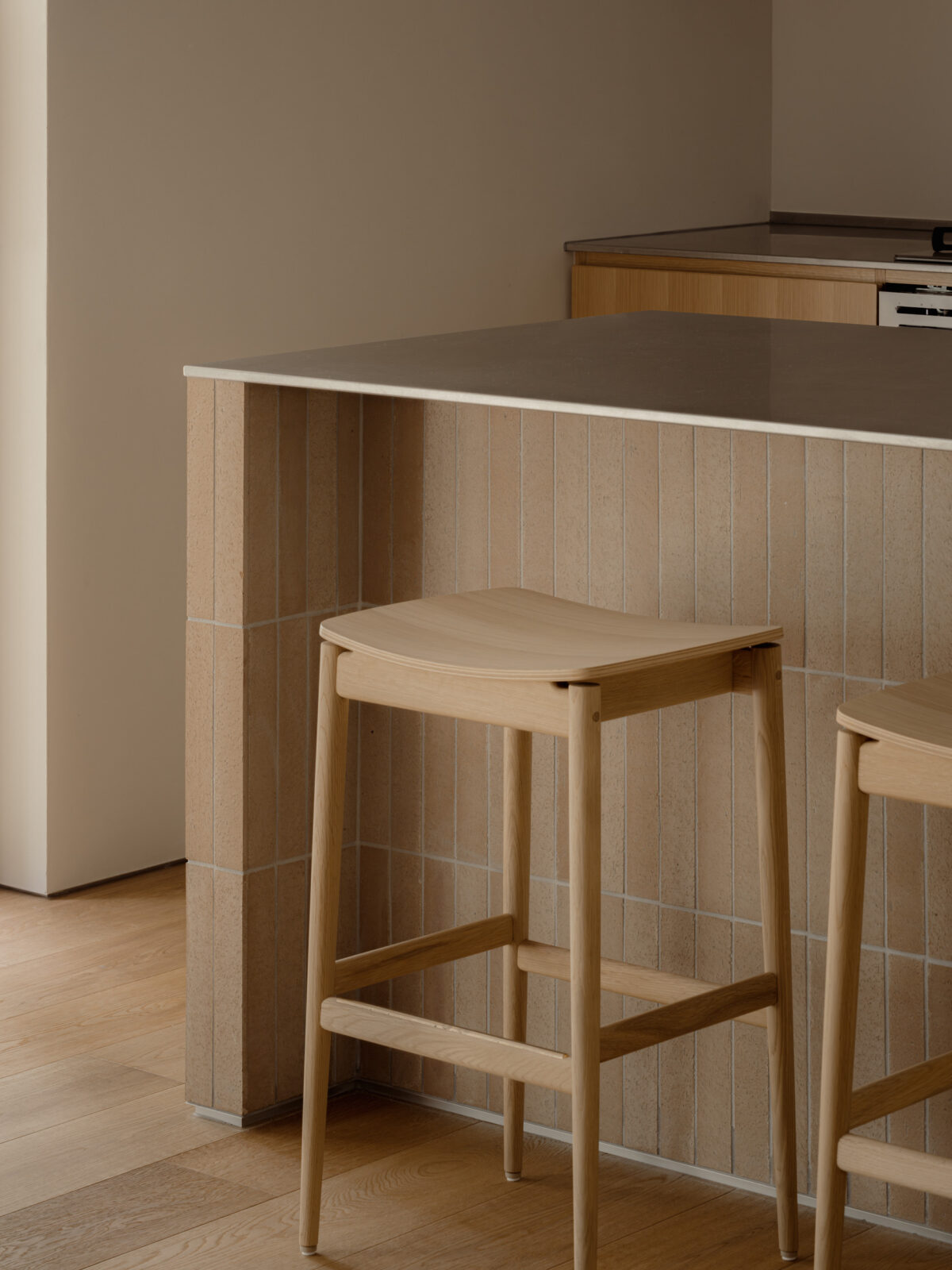
The design process began with the site and landscape strategy, with careful attention to how the house is perceived from the approach and how it sits within its surroundings. Responding to site conditions, parking requirements, and the local scenery, a minimal set of functions and a rational layout were first defined. From this framework, the architecture took shape through the careful accumulation of details, including material choices, junctions, and built-in elements.
Based on conventional Japanese timber construction, the house maintains a clear structural simplicity while allowing flexibility for contemporary living. The first floor accommodates a workspace and atelier, supporting collaborative work with staff as well as visits from guests. At the entrance, a custom sliding door with expansive glazing creates an open threshold while maintaining a calm and focused atmosphere within. A magnetic wall was also integrated into the workspace, providing a surface for everyday creative activity.
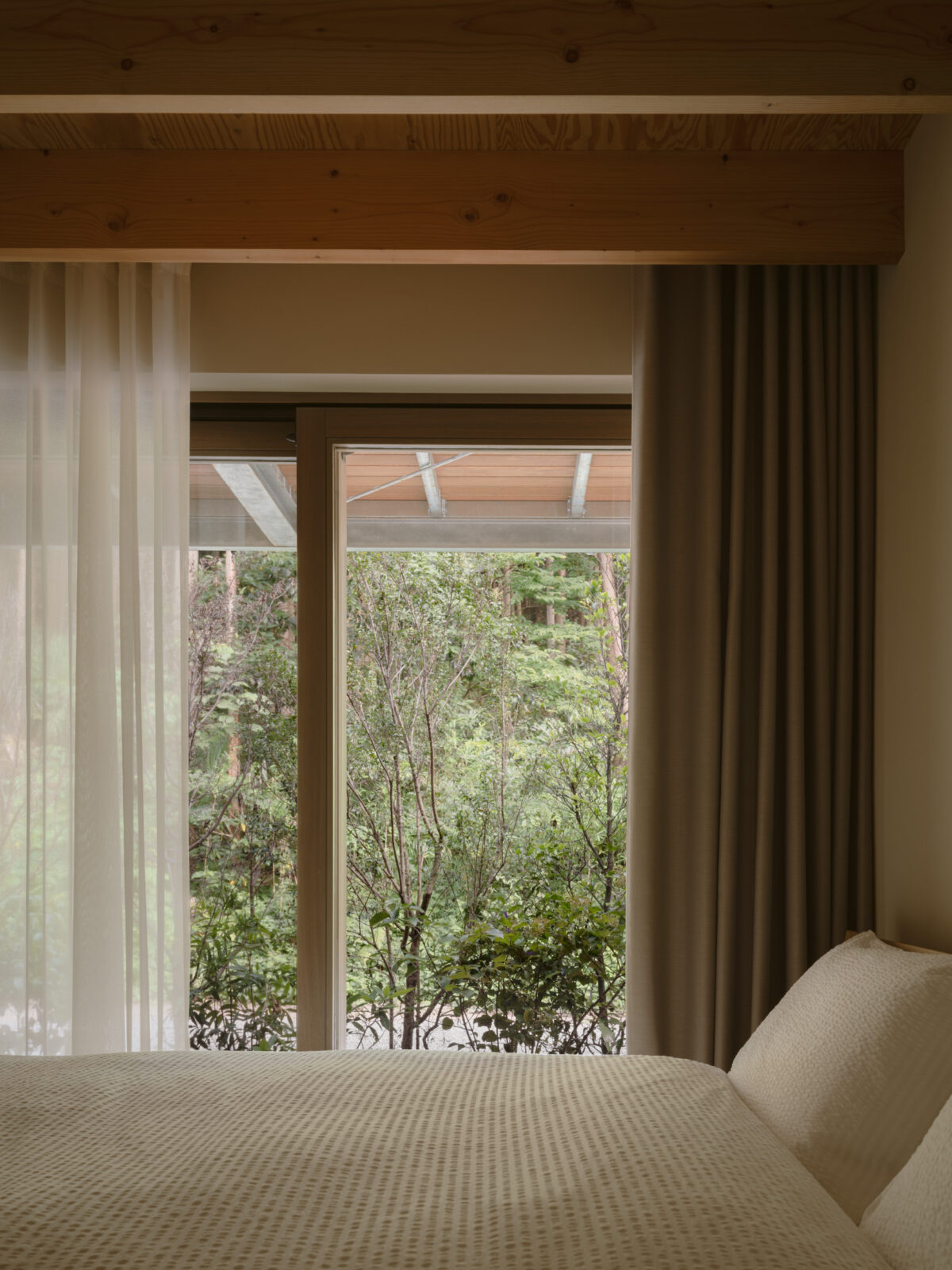
The second floor is organized around the living and dining area. A generous south-facing opening draws in daylight and views, while deep eaves and a deck terrace filter direct sunlight. By avoiding excessive brightness and maintaining a composed light environment, the greenery beyond the windows becomes more vivid and present. Openings placed throughout the house further frame the surrounding landscape while ensuring comfort across the seasons.
With the forest just beyond, the house is intended as a quiet setting for a variety of moments, from working and resting to gathering, unfolding naturally over time.